Every organization has standards — that’s not the issue.
The issue is that, for many organizations, standards don’t go much further than the poster in the break room. There may be checklists and processes that give the appearance of a strict adherence to guidelines, but when it comes to day-to-day work, accountability systems are quickly put on the back burner when pressure starts to mount.
If deadlines are looming, a customer is getting impatient, or a piece of equipment needs downtime for repairs… That’s when corners get cut.
Here’s the dangerous part of relaxing the discipline around standards: for many enterprises, this approach seems harmless or even beneficial if there’s money to be saved. And, because employees learn to compensate for gaps in the system, oftentimes operations can still function and customers can still be served, at least for a little while.
Eventually, though, this lack of discipline affects the entire ecosystem of a company. Larger processes become increasingly dependent on the workarounds of individuals, which means performance starts to vary from person to person and problems become harder to trace back to root issues.
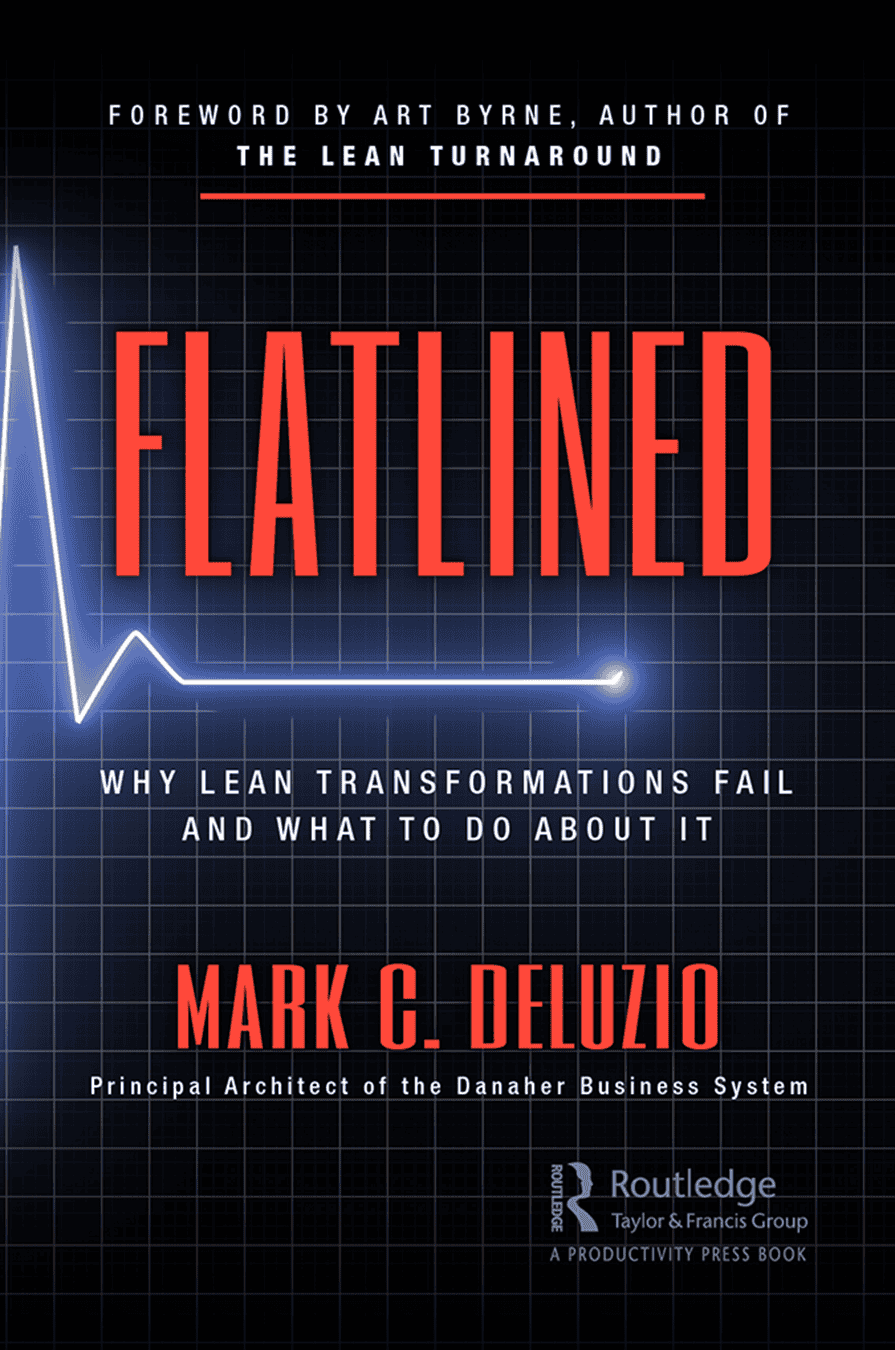
This pattern has been made clear in Mark DeLuzio’s 30+ years of Lean consulting, but it doesn’t just show up in manufacturing spaces.
Airlines and hospitals rely on standardized procedures and structured checklists because small oversights carry serious consequences. High-performing sales organizations develop uniform processes because strong customer relationships can’t thrive on personality alone.
The success of Lean initiatives depends on reliable outcomes, and reliable outcomes require disciplined execution. Without that discipline, even the well-designed systems of hospitals and airlines start to drift — and the consequences can be, quite literally, deadly.
In This Article
- A Disciplined Approach to Standards is the Key to Avoiding Overconfidence
- Lean Is a Process, Not a Personality Trait
- Discipline Is What Turns Improvement Into Competitive Advantage
- Great Organizations Depend on Discipline
A Disciplined Approach to Standards is the Key to Avoiding Overconfidence
“We already know how to do it.”
This phrase is one of the most dangerous utterances to hear in an enterprise.
But it can be hard to catch as a leader or decision-maker, because on the surface, it sounds like competence. While it’s important for employees to develop integrated knowledge and problem-solving skills in their work, this type of familiarity can quickly turn into overconfidence.
Overconfidence — as well as pressure from leadership to make choices that, at times, prioritize metrics above safety — creates shortcuts. This is when employees begin working from memory rather than process because the work feels routine.
In many companies, this shift happens so subtly that nobody notices it until performance becomes inconsistent or a serious mistake finally exposes the gaps that have been building underneath the surface.
And if your organization produces something innocuous, like ballpoint pens, then this leniency might not result in life-or-death situations. But high-risk industries face this issue regularly.
Commercial pilots are required to still work through pre-flight checklists even after decades of flying experience because the checklist isn’t there to make up for incompetence. It exists because human beings are fallible, especially under pressure, fatigue, distraction, or routine.
The purpose of standardization, especially in Lean thinking, is to create reliability regardless of circumstances.
When this discipline fades, the consequences can be deadly, as was the case of the horrific plane crash in Statesville last year. In this tragic example, a lack of disciplined adherence to standards contributed to the death of former NASCAR champion Greg Biffle, as well as his wife and children.
“This is a clear case of seven people dying needlessly because simple standards were not followed.” — Mark DeLuzio
The point is routine flights, hospital procedures, and, yes, manufacturing systems rarely fail because they lack talented individuals. They fail when consistency is gradually eroded and standards slowly become optional.
Lean Is a Process, Not a Personality Trait.
The overconfidence that leads to operational standards becoming “optional” doesn’t just show up on the manufacturing floor.
Once someone develops a high level of skill at their job, there’s often an assumption that structure is no longer necessary — and this is true for every role.
Leaders might start trusting their instincts over systems while employees start relying on memory and repetition over preparation. In fact, entire departments can begin operating according to individual habits rather than standardized methods.
It even happens with sales.
“The sales job is much harder now because people have already made up their mind on a lot of things.” — Randy Fitzhugh
Many sales-oriented organizations insist they already know how to “sell value,” yet very few can produce a documented process for how that value selling is supposed to happen. For those outside the sales sphere, the belief is that experienced salespeople simply know what to say, how to prepare, and how to develop customer relationships effectively.
But this logic, when you take a closer look, is no different than assuming a pilot no longer needs a checklist after their thousandth flight.
Yes, in the latter example, the aftermath can be deadly. But in both cases, organizations have started to place too much faith in individual talent and too little emphasis on disciplined execution.
The result, no matter how you shake it, is inconsistency, and inconsistency runs counter to the principles that make Lean work.
When different people approach the same situations differently, performance becomes almost impossible to measure, especially by traditional metrics, and outcomes become increasingly dependent on who happens to be involved.
The organizations that sustain operational excellence approach this differently.
At Danaher, sales was treated as a process in the same way manufacturing was treated as a process. Lead qualification, pre-call planning, and territory management were all standardized. Even customer conversations were practiced repeatedly so that preparation became habitual rather than optional.
But, to be clear, the goal of standardization is not to eliminate skill or judgment altogether. The goal is to create an operational baseline that allows organizations — whether they’re making ballpoint pens or medical equipment — to perform consistently regardless of pressure, workload, or individual variation.
Without that discipline, even highly capable teams start operating according to preference rather than process.
Discipline Is What Turns Improvement Into Competitive Advantage
On top of creating operational instability internally, a lack of discipline in an organization also weakens its ability to compete externally — and this is a critical concept to understand if you, as a leader or decision-maker, are truly committed to Lean thinking.
Because many organizations turn to Lean training for the promise of improved lead times and reduced inventory, not understanding that these gains often fail to translate into meaningful growth when there’s no disciplined system in place.
This is where many Lean transformations begin to break down.
A company may improve operationally while continuing to struggle commercially because the discipline that exists inside manufacturing never extends into sales, fulfillment, customer communication, or performance measurement. As a result, the organization improves internally while customers experience very little difference externally.
Case Study: Western Instruments
One example of this came during a Lean transformation at Western Instruments, a temperature controller manufacturer operating in a highly competitive market.
At the time, the company believed it already possessed a lead time advantage because orders shipped in roughly 28 days while competitors averaged closer to 35. Internally, leadership viewed that difference as a meaningful strength.
Customers did not.
From the customer’s perspective, there was very little distinction between waiting four weeks and waiting five. While the company technically performed better than competitors, the improvement wasn’t significant enough to meaningfully change customer behavior.
After applying Lean principles throughout operations, however, the company reduced lead times from 28 days to just 3 days. At the same time, inventory turns improved dramatically and on-time delivery performance also leaped into the high 90% range.
But one of the most important changes to note here involves discipline around measurement.
Initially, the company measured on-time delivery against promised dates rather than customer requested dates. Internally, the metric appeared healthy because orders arrived according to the revised commitments the company had negotiated with customers. Externally, customers were still frustrated with delays because products were not arriving when they were originally needed.
Mark DeLuzio refers to metrics like these as “watermelon KPIs” because they look green from leadership’s perspective, yet remain a bright, glaring red to customers.
“[You’re] patting yourself on the back, when all along the customer thinks you stink.” — Mark DeLuzio
Discipline in All Areas Is the Key
Once leadership recalibrated performance measurements around customer requested dates instead of internally adjusted targets, the organization gained a much clearer understanding of where delivery performance actually stood.
That discipline forced the company to align its metrics with customer reality rather than internal convenience, and their improvements became far more valuable once the company could reliably communicate those advantages to customers.
Discipline, it turns out, has just as many far-reaching benefits as the lack of discipline has consequences.
The takeaway here is that operational improvements have the power to become competitive advantages, but only when discipline is respected, prioritized, and extended beyond manufacturing itself.
Organizations must apply the same rigor to sales processes, customer communication, fulfillment systems, accountability structures, and performance measurement that they apply to production operations.
Otherwise, Lean improvements remain trapped internally while customers continue experiencing inconsistency and delays until they stop coming back altogether.
Great Organizations Depend on Discipline
There’s a clear relationship between discipline and accountability here, and it’s worth acknowledging because the latter is often misunderstood as a mechanism for punishment.
In a dysfunctional organization with dysfunctional systems, that makes sense. Without disciplined standards, employees develop workarounds or base performance assumptions on illusive, unmeasurable personality quirks. Then, when something goes wrong, they’re often the first to catch the blame.
But a lack of discipline stems from either a company culture that allows it or a process that requires it in order to be completed. In both cases, there’s something larger to point at rather than an individual employee.
In a disciplined Lean system, accountability serves a very different purpose. It’s the practice of maintaining alignment between what an organization intends to do and what actually happens in execution.
Without that alignment, standards first lose consistency and eventually lose meaning entirely. As a result, operations are less safe and customers are less satisfied. Leaders, executives, and decision-makers, this is what to take away from this exploration of discipline in Lean: Strict adherence to standards is how you keep internal safety for your employees and your competitive advantage externally in check.
Frequently Asked Questions
- What does discipline mean in Lean thinking?
In Lean thinking, discipline means consistently following standardized work, processes, and accountability systems even when pressure increases or conditions change. It ensures that improvements are sustained over time rather than depending on individual judgment or improvisation. Discipline is what allows Lean systems to produce reliable, repeatable outcomes across teams and environments. - Why is discipline so important in Lean organizations?
Discipline is important in Lean organizations because it is what connects process design to actual execution. Without discipline, even well-designed systems break down when employees begin skipping steps or relying on memory. This leads to variation in performance, inconsistent results, and difficulty identifying root causes of problems. Lean only works when standards are applied consistently. - What happens when organizations lack discipline in Lean systems?
When organizations lack discipline in Lean systems, they often experience hidden inefficiencies that are masked by individual workarounds. Over time, performance becomes inconsistent, accountability weakens, and problems become harder to trace. Although operations may appear functional in the short term, the system gradually loses stability and reliability, which can ultimately impact customer satisfaction and safety. - How does overconfidence undermine Lean standards?
Overconfidence undermines Lean standards when experienced employees begin to believe they no longer need to follow structured processes. This leads to shortcuts, informal methods, and reliance on memory rather than standardized work. While this may seem efficient in the moment, it increases variability and creates conditions where errors and missed steps are more likely to occur. - What are “watermelon KPIs” in Lean management?
Watermelon KPIs are performance metrics that appear healthy internally but mask poor external results. They are often green on internal dashboards but red from the customer’s perspective. This happens when organizations measure performance using internal targets rather than customer-defined expectations, leading to a false sense of success and misaligned decision-making. - How does Lean discipline create a competitive advantage?
Lean discipline creates a competitive advantage by ensuring that operational improvements extend beyond the shop floor into sales, fulfillment, and customer communication. When discipline is applied consistently across the entire value stream, organizations can deliver faster, more reliable service that customers actually experience. This turns internal efficiency gains into real market differentiation.