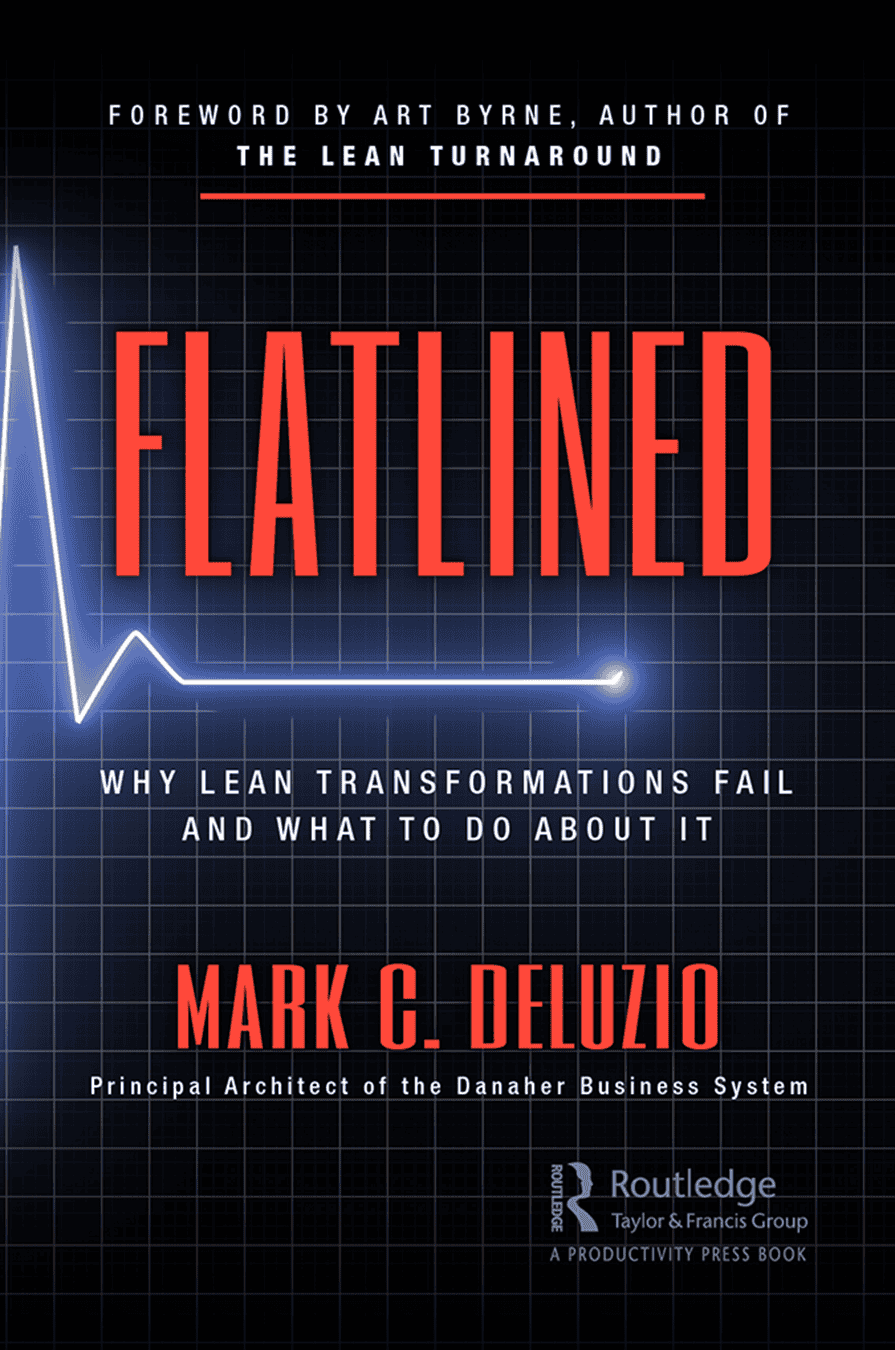
In the spring of 2026, Lean Horizons Consulting officially turned 25.
For a quarter of a century now, our team of internationally experienced Lean experts have been pursuing a single purpose:
To be the embodiment of Lean ideology in leading business change that invigorates economic growth and improves quality of life.
To that end, we’ve implemented countless transformations across dozens of industries and countries. We’ve seen the real-world conditions that challenge Lean principles and we’ve guided industry leaders through them and to the other side, where sustainable change and sustainable scaling are possible.
After 25 years of this work, our team has learned a lot.
While encapsulating this knowledge, which is both experiential and propositional, into a single article is impossible, one key theme stands out.
That is the importance of standard work.
A core facet of Lean methodology, standard work has been both testing and transforming businesses for decades now. Many decision-makers who are new to Lean balk at the idea of standard work, and many experienced Lean thinkers underestimate its importance.
Yet understanding standard work clearly, thoroughly, and deeply is often the make-or-break factor of Lean transformations, hence the importance of clearing up several misconceptions regarding standard work.
In This Article
- Misunderstanding #1: Standard Work Is About Telling Operators How to Do Their Jobs
- Misunderstanding #2: Standard Work Has to Wait Until the Process Is Stable
- Misunderstanding #3: Standard Work Is Only for High-Volume Production
- Misunderstanding #4: Problems and Downtime Should Be Built Into the Standard
- Misunderstanding #5: Standard Work Is a Document You Create Once
- Standard Work Creates the Foundation for Improvement
Misunderstanding #1: Standard Work Is About Telling Operators How to Do Their Jobs
One of the first questions organizations face when introducing standard work is where to begin.
Thankfully, the answer is deceptively simple: start with the people doing the work.
Standard work should be developed with operators, not handed down to them by management. The people performing a process every day have firsthand knowledge of how the work actually happens, and their experience is essential to establishing the current best way to perform it.
“Operators are your best consultants.” — Mark DeLuzio
But before additional misunderstandings abound, let us be clear: This doesn’t mean that each operator should use a different method. While every operator will, without standard work, likely have a preferred method for completing a task or process, the goal is to work together to establish one best way.
(And, critically, the one best way should be the most efficient way for a process to proceed at that particular point in time — that operational approach can and will often shift as a business evolves. See Misunderstanding #5 for more detail.)
How does determining this one best way look in practice for leaders and decision-makers?
First, if several operators perform the same assembly but each follows a different sequence, bring them together and examine the actual work. Start by determining the appropriate order of operations while incorporating their input in order to establish the standard.
Operator input is crucial, but quality or engineering personnel can also provide technical oversight where necessary to make sure the process meets product requirements.
This approach changes the role of leadership. Instead of telling people how to perform work they themselves may not fully understand, leaders can ask the people doing the work what’s actually happening and what is needed to make the process successful.
Standard work therefore gives operators a meaningful role in defining the process they are expected to follow, creates a common reference point for the team, and provides a foundation for identifying where the process can improve all in one fell swoop.
Misunderstanding #2: Standard Work Has to Wait Until the Process Is Stable
While this misunderstanding might seem nonsensical to seasoned Lean thinkers, it can prevent even the most Lean-enthusiastic organizations from implementing standard work indefinitely.
Leaders stuck in this misconception often make the same argument: The process is too chaotic to standardize, so the company needs to fix its problems first. Once things stabilize, then and only then can standard work can be introduced.
The problem is that standard work is one of the tools used to create stability in the first place.
“It’s like the guy [who says], ‘I can’t go to physical therapy until my shoulder gets better!’” — Mark DeLuzio
If a leader believes a process is too chaotic to implement standard work, then standard work is the exact tool needed at that time.
After all, it’s a standard that establishes a reference point for the process. It defines the one best way to perform a repetitive operation at that time, and while that method may still contain waste and opportunities for improvement, it provides a baseline for further refinement.
What matters most is having a known condition against which actual performance can be compared.
Once that standard exists, deviations become visible. If an operator cannot complete the work according to the standard because of a quality problem, equipment issue, material shortage, or another abnormality, then the organization has something concrete to investigate.
Without a standard, improvement becomes difficult to define. If three operators perform the same process three different ways, what exactly are you improving? Without a common reference point, the organization is effectively trying to improve three different processes at once.
That is why leaders who wait for perfect stability before establishing standard work end up getting Lean thinking entirely backward.
Misunderstanding #3: Standard Work Is Only for High-Volume Production
Standard work is sometimes dismissed by organizations that operate in high-mix, low-volume environments. The assumption is that because products, customers, or demand vary, there can’t be a defined standard.
But, contrary to popular belief, variation in demand does not eliminate the need for standard work. In many cases, it actually makes disciplined processes even more important.
Take TPS for example.
The Toyota Production System was developed in an environment where Toyota did not have the resources or production volumes of the large American automakers of the time. They were required to produce smaller quantities of different models, which in turn required flexibility and the ability to perform frequent changeovers.
That is fundamentally different from designing a production system around large batches simply to avoid changeovers — and avoiding changeovers is often over-prioritized by Lean leaders who misunderstand the concept.
In a Lean system with clear and defined standards, more frequent changeovers can actually support smaller production lots and allow for a closer relationship between production and actual demand.
The same principle applies beyond manufacturing. A repetitive service process, administrative task, technical procedure, or other recurring operation can have standard work even when the overall business handles significant variety.
Sure, a process may involve several instances of work that are not identical, but there are often still repeatable elements of the process that can be observed, defined, and improved.
That’s where standard work needs to be implemented.
Misunderstanding #4: Problems and Downtime Should Be Built Into the Standard
Part of the reason why changeovers have come to be feared in many enterprises is because of the downtime required for such transitions. But avoiding downtime, which is necessary in some cases, prioritizes an ideal over material reality — emphasizing an internal metric over actual demand and production flexibility.
So let’s take a deeper look at downtime and bring it into a real-world example for clarity around standard work:
Suppose a process is designed to require six people, but quality problems, equipment downtime, or material shortages regularly prevent the team from meeting demand. An organization or Lean leader that misunderstands standard work and KPIs might respond by changing the standard to show that ten people are normally required.
That may make the performance numbers look better, but it also hides the problem. When this happens, leaders are falling prey to a concept Mark DeLuzio refers to as “watermelon KPIs,” or KPIs that look green to management but are a bright, glaring red when you look deeper inside them.
To avoid getting caught in the watermelon KPI trap, it’s crucial for leaders to understand that standard work should represent the expected process, and abnormalities should be treated as deviations from the standard, even when they’re recurring.
(Perhaps especially so when the abnormalities are recurring!)
If the process constantly requires additional labor because of quality problems, leaders should investigate the root causes of this repetitive issue, not change the standards and numbers to fit a goal.
The effects of ignoring this distinction can’t be overstated.
Sometimes changeovers, and subsequently downtime, is required to add a layer of flexibility to a small-batch production process. However, when unnecessary downtime becomes a part of the standard, then unnecessary downtime can start to look normal. Similarly, if rework becomes part of the standard, rework can start to look like an accepted part of production, but neither should be treated that way.
This makes accomplishing continuous improvement difficult, to say the least.
In a truly Lean organization, operators should be able to focus on their standard work instead of repeatedly leaving the process to retrieve parts, correct defects, or perform rework. If you see those activities happening regularly in a process, treat them as signals that something outside the standard requires attention.
Misunderstanding #5: Standard Work Is a Document You Create Once
Perhaps the most fundamental misunderstanding is treating standard work as a noun rather than a verb, and many self-anointed Lean experts make this mistake.
After creating a document, posting at the workstation, and training employees on it, they pat themselves on the back and consider standard work to be finished, completed, done.
This, if it wasn’t obvious already, fundamentally misses the point of standard work.
Rather than being a theoretical or hypothetical description of how someone thinks the process ought to operate — now and forever, despite company growth and changes — standard work is a living, changing, daily practice.
Employees at every level should be encouraged to work to the current standard, observe when the process deviates from it, investigate why, and improve the process when a better method is identified.
This also means that the standard should reflect a normal, sustainable pace of daily work. Timing someone who is working unusually fast one day does not establish a useful standard if that pace cannot be maintained. The purpose is to understand the actual process under normal conditions and use that understanding to establish the current best way.
Then the cycle begins again: work to the standard, identify deviations, investigate the causes, conduct Kaizen, establish the improved method as the new standard.
This cycle is what makes standard work foundational to continuous improvement, and you can’t have one without the other.
Standard Work Creates the Foundation for Improvement
Standard work is sometimes perceived as rigid or overly bureaucratic. Mark DeLuzio has heard it all before: Leaders who say they won’t implement standard work because “telling operators how to do their jobs is demeaning.”
But nothing could be further from the truth.
“As a matter of fact, not having a standard, not having a prescribed way in which work gets done, creates chaos, firefighting, quality problems, and delays… It is probably one of the more disrespectful things that a leader could do.” — Mark DeLuzio
The value of standard work, put simply, comes from creating clarity.
Without a defined process, variation is difficult to see, and without visibility of variation, problems are difficult to prioritize. In turn, without a clear baseline, improvement becomes difficult if not impossible to measure.
Standard work provides that baseline for operators while also giving leaders a better understanding of what is actually happening on the shop floor. Rather than something to be feared, avoided, or rushed through, standard work is something to be embraced, prioritized, and returned to time and time again.
After 25 years of Lean implementation, this has been made increasingly clear. Without a standard, there is no stable reference for improvement. With one, every deviation becomes an opportunity to learn, investigate, and improve.
That is why standard work belongs firmly in the foundation of Lean efforts, not at the end of a transformation.
Frequently Asked Questions
Standard work is the documented, current best way to perform a repetitive process. It establishes a consistent sequence, pace, and method for completing work so teams can identify deviations, solve problems, and improve the process through Kaizen.
Standard work provides a baseline for measuring process performance and identifying abnormalities. Without a defined standard, it is difficult to determine whether a process has improved because employees may perform the same work in different ways.
No. Standard work can be used in high-mix, low-volume environments as well as manufacturing, service, administrative, and other repetitive processes. The amount of variation in a business does not eliminate the need to establish a current best way of performing repeatable work.
No. Standard work is one of the tools used to create process stability. Establishing a baseline allows an organization to identify deviations, quality problems, downtime, and other abnormalities that can then be addressed through Kaizen.
Standard work should be reviewed and improved continuously. Teams work to the current standard, identify problems or opportunities for improvement, conduct Kaizen, and establish a new standard when a better way of performing the work is found.