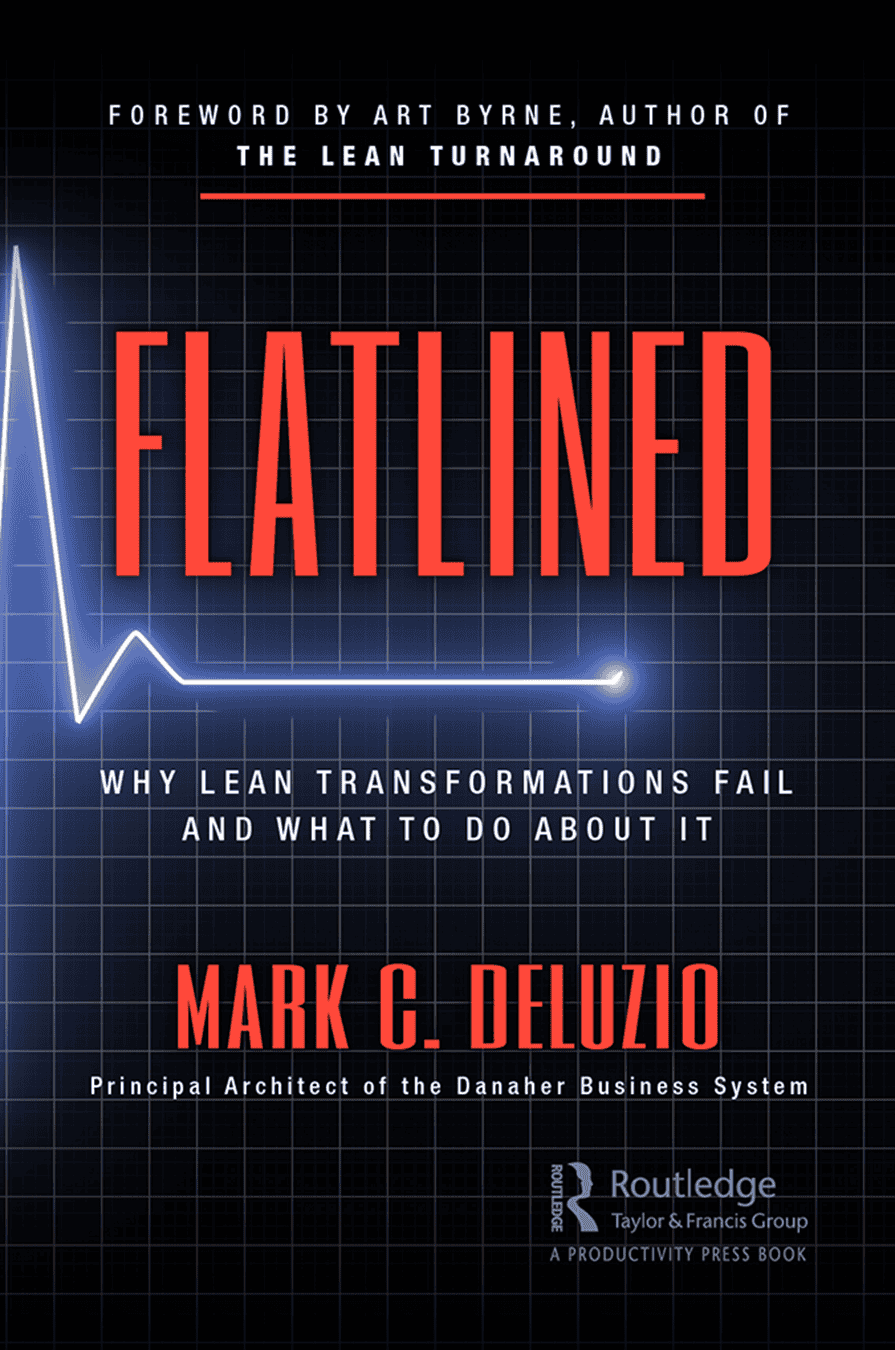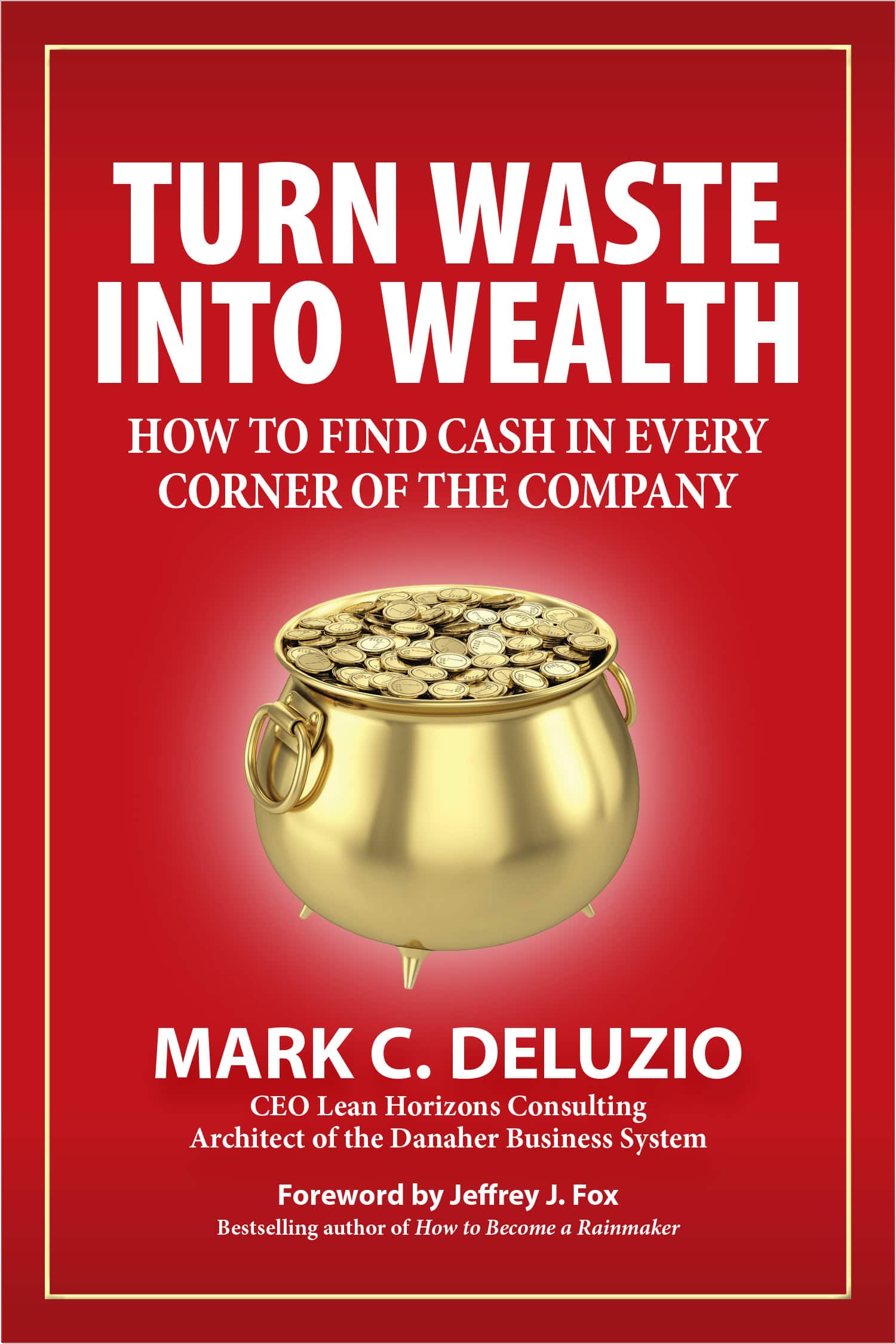
A quarter of a century has passed since Lean Horizons Consulting first opened its doors, but our timeline goes back even further than that, if you can believe it.
40 years ago, Mark DeLuzio, founder and CEO of Lean Horizons Consulting, first entered the world of Lean to learn the methodology directly from the originators of the Toyota Production System themselves. Afterwards, he spent 14 years at Danaher, where he served as the principal architect of the Danaher Business System — the system widely cited as the gold standard for enterprise transformations.
Following his tenure at Danaher, Mark DeLuzio launched Lean Horizons Consulting at a time when the Lean landscape looked very, very different.
Over the last 25 years, Lean has grown significantly and more organizations have adopted Lean programs all across the world. On one hand, this growth is important and necessary. But on the other hand, it’s created a serious challenge for modern-day Lean thinkers.
Because, as Lean has moved further away from its originators, the principles have become diluted to the point where many organizations are confusing Lean activities with real, genuine Lean transformation.
This is a trend we’ve seen grow steadily over the last quarter century: Companies have all the terminology, all the Kaizen events, and all the visual systems associated with Lean, but still aren’t Lean organizations.
This, as Mark DeLuzio calls it, is Lean theater.
Lean theater creates the appearance of improvement without addressing the deeper changes required to sustain it, making it especially tricky to spot for leaders and decision-makers. But the core differentiator that separates real Lean transformation from Lean theater isn’t particularly complicated.
In fact, it’s quite simple. What separates them is whether or not leaders are truly committed to the fundamentals that have defined Lean from the very beginning.
In This Article (Anchor Links)
- The Fundamentals That Shape Successful Lean Transformations
- How Standard Work Reveals the Difference Between Lean Practice and Lean Theater
- The Next Generation of Lean Leadership Requires Transformation Capability
The Fundamentals That Shape Successful Lean Transformations
Lean, as a methodology, has a long, rich history. How many proponents of other business management frameworks can say the same?
The reason Lean has held its ground even while other trending strategies and techniques have come and gone is because the fundamentals that underscore Lean thinking are built on common sense, and, critically, they haven’t changed.
At its core, Lean is about creating a system where problems become visible, people are equipped to solve them, and leaders continuously improve the way work gets done. While the tools associated with Lean may evolve, these underlying principles remain steadfast.
It’s these principles that allow Lean to function as an operating system rather than a collection of isolated improvement activities. And it’s leadership involvement that creates the conditions for continuous, systemic improvement — without it, even the most well-intentioned Lean transformations rely too heavily on individual tools and terms and, eventually, fall flat.
This is because an overemphasis on Lean tools, rather than the principles, can quickly create a disconnect between the daily realities of the business and the expectations set by leaders for how problems are addressed and how decisions are made.
But let us be clear: Tools like Kaizen events, value stream mapping, and visual management can be incredibly valuable for organizations when they’re used to support Lean principles.
It’s when they become the focus of the transformation that they turn into activities performed for the sake of completion rather than mechanisms for improvement.
“If Taiichi Ohno were alive and he walked into your organization tomorrow, what would he see? Would he see Lean in action or would he see what I call Lean theater?” — Mark DeLuzio
If we’ve learned anything in 25 years of Lean consulting, it’s that a successful transformation is built around changing how an organization thinks, operates, and behaves. Culture and mindset changes are at the heart of effective evolution, so when leaders prioritize the fundamental principles, Lean becomes a powerful system for developing people, improving processes, and creating lasting results.
When leaders focus too heavily on giving the appearance of Lean operations by using all the tools and terms without changing the culture, Lean theater takes hold.
How Standard Work Reveals the Difference Between Lean Practice and Lean Theater
One of the clearest examples of the difference between real Lean and Lean theater is standard work.
Standard work is one of the foundational elements of Lean because it creates the baseline for understanding how a process currently operates. Without a defined standard, organizations can’t identify variation, understand problems, or determine whether improvements are actually making a difference with any sort of clarity.
Yet many contemporary companies misuse, or flat-out refuse, standard work.
In the last 25 years, we’ve seen three attitudes toward standard work become more and more prevalent:
- The “One and Done” Attitude: This is when Lean leaders and decision-makers think they’ve done standard work after creating documentation for a task. Yes, documentation is important, but standard work isn’t something that can be “completed” — it’s something an organization continuously improves.
- The “It’s Rude” Attitude: Many Lean leaders mistakenly view standard work as demeaning for their operators. This is simply untrue. What’s demeaning to operators is forcing them to work without a standard operating procedure, and then leaving them to deal with the fire-fighting, chaos, and waste that comes as a result.
- The “Not Yet” Attitude: This particular attitude is at once the most baffling and the most forgivable. Leaders in the throes of improvement efforts often misunderstand standard work and believe that they must solve their problems or stabilize production first, and only then can they implement standard work. In reality, implementing standard work is how many leaders can solve problems and stabilize production in one fell swoop.
In all three instances, Lean leaders have misinterpreted the fundamental principles that make standard work an efficient avenue for continuous improvement and are veering into Lean theater territory.
For Lean to be effective, leaders must treat standard work as an ongoing management responsibility, rather than a one-time administrative task or a down-the-road initiative.
The difference is critical, and all Lean leaders need to understand that the presence of a tool doesn’t guarantee transformation. It’s the way these tools are understood, used, and managed that indicates whether an organization is truly practicing Lean or performing it.
The Next Generation of Lean Leadership Requires Transformation Capability
Lean leaders already know how to use the terms, utilize the tools, and perform actions associated with the methodology.
So, by now, it should be clear that the greatest difficulty leaders face is understanding how to actually apply Lean principles, not tools, to their organizations.
As a result, many leaders are tempted to look to successful Lean organizations for examples, hoping to replicate the systems and practices that created those results. But again, the focus is being drawn to systems and practices rather than principles and cultures, and the desire is emulation or performance. That’s still Lean theater.
This is why Mark DeLuzio believes the future of Lean depends on building transformation capability.
Toyota’s success, for example, is often misattributed to the visible practices found on the factory floor — their equipment, their flows, their operators. When in reality, much of the real work is happening beneath the surface in how leaders think, how problems are solved, how products are designed, and how the organization develops people over time.
“I asked a leader at Toyota in Japan, how can you allow your competition into your factories? And the answer was, ‘What they need to know, they cannot see.’” — Mark DeLuzio
Those elements are what allow Lean principles to adapt across industries and business environments. And the greatest opportunity for organizations over the next 25 years is going to be in developing leaders who can apply those principles within their own operations.
Manufacturing companies, healthcare organizations, aerospace companies, and service businesses all face different challenges, but they share the same need for leaders who can understand problems, improve processes, and develop their teams, not just give the appearance of doing these things.
Lean has always been about creating that capability. When organizations focus on building people who can continuously improve the business, transformation becomes part of the operating system itself and ceases to be a performance.
After a quarter century of Lean implementation, the lesson remains clear: The organizations that create lasting change are the ones that develop the ability to improve from within, not the ones that develop the impression of improvement on the surface.
Frequently Asked Questions
Lean theater is when organizations adopt the visible tools, terminology, and activities associated with Lean without fully implementing the underlying principles that make Lean effective. This can include running Kaizen events, creating visual management systems, or implementing Lean terminology while failing to build the leadership behaviors, problem-solving capabilities, and continuous improvement culture required for sustainable transformation.
Lean tools are specific methods used to support improvement, such as standard work, value stream mapping, visual management, and Kaizen events. Lean principles are the foundational ideas behind those tools, including creating visibility into problems, developing people, reducing waste, and continuously improving processes. Tools are effective when they are used to reinforce these principles rather than becoming the primary focus of a transformation.
Standard work is important in Lean because it establishes the current best-known method for completing a process. By creating a clear baseline, organizations can identify variation, uncover problems, and measure the impact of improvements. Standard work is not a one-time documentation exercise; it is an ongoing management practice that supports continuous improvement.
Leadership plays a critical role in Lean transformation because leaders create the systems, expectations, and culture that allow continuous improvement to take place. Successful Lean organizations rely on leaders who actively develop problem-solving capabilities, support process improvement, and reinforce Lean principles through daily decision-making.
Building transformation capability means developing leaders and teams who can identify problems, improve processes, and adapt Lean principles to their specific business environment. Rather than copying another organization’s Lean practices, companies build the internal capability to continuously improve their own operations over time.
Yes. While Lean originated in manufacturing, its principles apply across industries, including healthcare, aerospace, financial services, and other service organizations. Any organization that needs to improve processes, solve problems, develop people, and create more consistent outcomes can apply Lean thinking.