Table of Contents
- The Lombardi Lesson: Excellence Is Boring on Purpose
- How Leaders Get Lean Wrong at the Start
- The Fundamental Lean Principles Leaders Must Relearn
- Lean Is Simple, Not Easy
It’s become increasingly clear that Lean, as a whole methodology, has a branding problem in the executive suite.
Many leaders and decision-makers see it as a toolbox, or else a performance program tied to productivity and cost reduction. When viewed this way, the responsibility shifts. By continuously delegating downward, Lean becomes an operational initiative rather than a management system or culture framework.
Then, when the downstream results disappoint, the conclusion is: Lean just didn’t really work there.
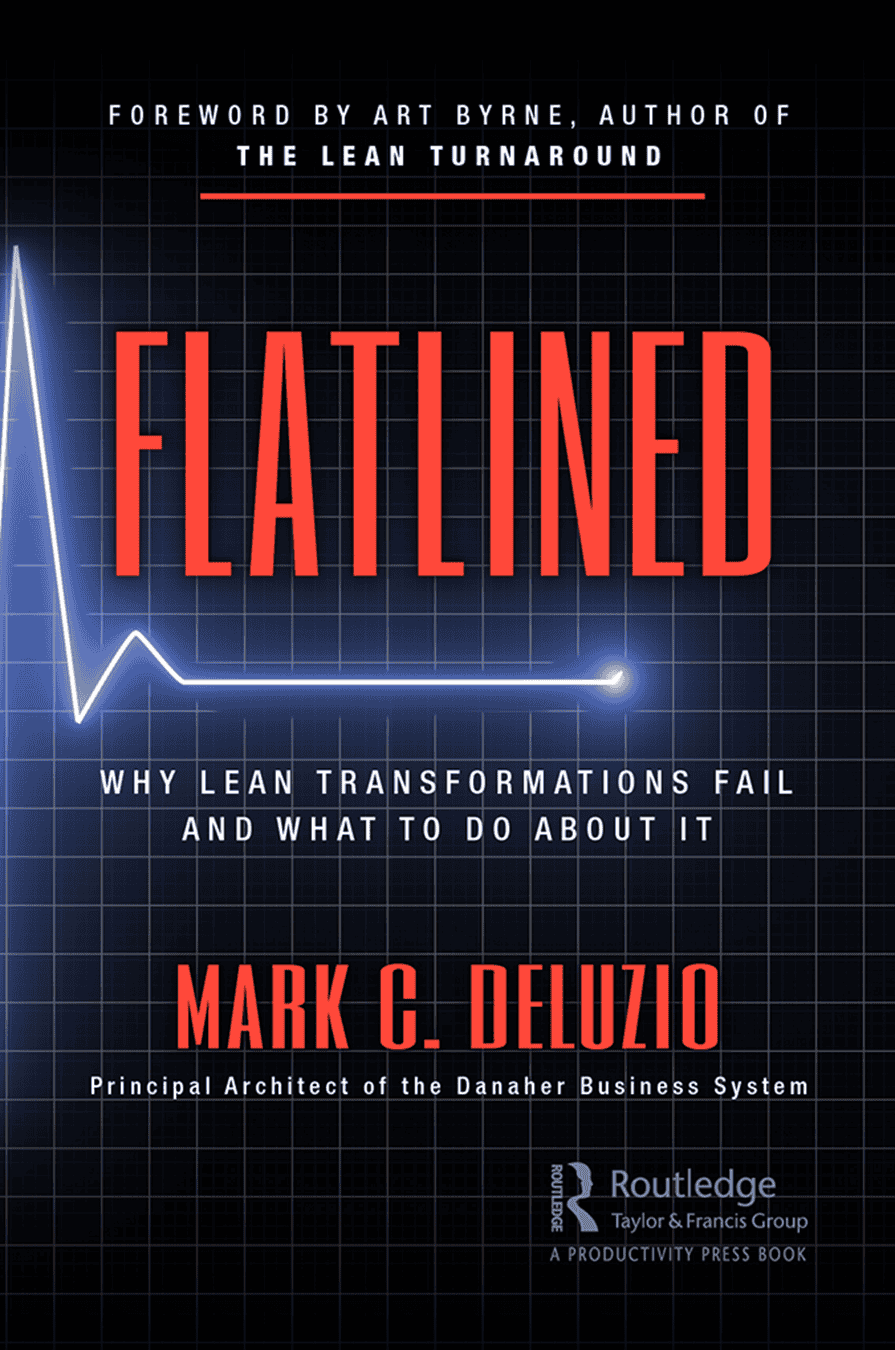
But the truth of the matter is that, oftentimes, Lean was never actually implemented. Sure, activities, workshops, and metrics were put in the spotlight, but the fundamentals that drive those elements were ignored.
The foundational disciplines that make Lean work — standardization, problem solving to a defined standard, and flow-based thinking — are treated as elementary concepts rather than executive responsibilities. They’re dismissed as “already understood.”
And in that dismissal, organizations undermine the very conditions required for sustainable performance. That’s why 2026 is shaping up to be a year for returning to the basics.
Lean maturity isn’t built by moving beyond the core principles, but by repeatedly returning to them with greater precision and discipline.
The Lombardi Lesson: Excellence Is Boring on Purpose
There is a reason this pattern of misunderstanding is so persistent, and it has very little to do with Lean itself.
High performers, especially at senior levels, are drawn toward complexity. Advanced strategies, new frameworks, and visible initiatives feel like progress. Fundamentals, by contrast, feel remedial, like something to move past rather than something to treat with continued reverence.
Vince Lombardi, an American football coach widely considered one of the greatest of all time, understood the danger of this mindset better than most leaders ever will. At the start of training camp, Lombardi would stand before professional athletes, hold up a football, and declare, “Gentlemen, this is a football.”
The statement was philosophical, not theatrical.
Lombardi’s teams didn’t begin with elaborate playbooks or sophisticated tactics. They began with blocking, tackling, positioning, and footwork. The most basic elements of the game were rehearsed repeatedly, long after players believed they had mastered them. Not because they lacked skill, but because Lombardi recognized that performance under pressure depends entirely on the stability of fundamentals.
“There were no silver bullets. There were no Katas involved or Gemba walks, or Agile or Factory 4.0 type of things. He went back to the basics and won all the championships.” — Mark DeLuzio
This principle sits at the heart of Lean, yet it is precisely where many leadership teams deviate. Once exposed to Lean concepts, executives often assume the foundational disciplines are already understood. Standardization becomes a foregone conclusion. Problem solving becomes an abstract competency. Flow is acknowledged conceptually but rarely enforced structurally.
The logic is subtle but destructive.
When Lean fundamentals are treated as knowledge rather than practice, they decay. When they are framed as operational concerns rather than management responsibilities, they fragment. And when leaders pursue advanced tools without reinforcing basic disciplines, systems grow increasingly fragile despite increasing activity.
How Leaders Get Lean Wrong at the Start
Lombardi’s declaration, “This is a football,” was a reminder that mastery is not achieved by progressing beyond the basics. It is achieved by returning to them relentlessly, with greater precision each time.
Lean transformations obey the same rule. Despite the clarity of this principle, most Lean journeys begin in exactly the opposite direction.
Executives rarely encounter Lean as a management system. More often, they are introduced to it as a solution set. A consultant brings it forward, a benchmarking visit sparks interest, or a conference presentation highlights impressive results. The entry point is typically framed around tools, cost reduction, or operational improvement rather than leadership behavior and organizational design.
From that moment forward, the trajectory is largely set.
Lean becomes associated with projects instead of principles, events instead of systems, and specialists instead of leadership. Responsibility quietly migrates downward, where teams are tasked with “implementing Lean” while senior leaders observe progress through dashboards, metrics, and periodic updates.
None of this feels unreasonable. In fact, it mirrors how organizations traditionally deploy initiatives, assign ownership, define targets, and measure outcomes. But Lean doesn’t operate within that logic. Lean isn’t an overlay for improving operations, it’s a management system that reshapes how decisions are made, how problems are surfaced, and how work is designed.
When leaders treat Lean as a program to be executed rather than a system to be embodied, distortions appear immediately.
The Fundamental Lean Principles Leaders Must Relearn
So, the obvious difficulty with Lean fundamentals is not that they’re complex, but rather that they’re deceptively simple, which makes them easy for experienced leaders to underestimate.
“I’m approaching my 40th year [of Lean consulting] and I’m still learning. If you’re not a consummate student in this and you think you know it all — well I’ve got news for you. You’re in the wrong business.” — Mark DeLuzio
Lean, at its core, does not operate on advanced tactics or sophisticated tools, but on a small set of disciplines that determine how work behaves under normal conditions.
And these fundamentals never stop being fundamental. Returning to them means restoring clarity around what actually drives Lean behavior.
1. Purpose Before Metrics
Purpose is the driving force behind all successful Lean transformations.
Yet leaders often fixate on productivity, utilization, and efficiency because they appear measurable and manageable. It’s imperative that decision-makers learn to recognize these figures not as levers of performance, but outcomes produced by the system. When executives attempt to manage results directly, they frequently distort the very processes that generate those results.
So, the defining question is not how to improve numbers, but how to align work with purpose. Customer demand, flow of value, and stability of execution become the governing constraints.
When metrics drive behavior, organizations optimize for appearances. However, when purpose drives behavior, organizations optimize for performance, and the distinction is not subtle.
2. Standardized Process Over Results
To reiterate: Results are lagging indicators. They tell you what happened, but not why it happened.
Managing outcomes instead of processes creates an endless cycle of reaction, where leaders chase end-result fluctuations without addressing underlying causes. When leaders truly understand Lean fundamentals, this pattern ceases to exist because attention is centered on process conditions.
Stable processes and clear standards create an environment where problems can be identified and solved systematically. Without that infrastructure, problem solving collapses into firefighting.
This is why standardization occupies such a central role.
A standard defines the current best-known method, making deviation observable and improvement possible. When standards are weak or absent, variation multiplies and performance becomes unpredictable regardless of effort.
3. Flow, Not Local Efficiency
Traditional management systems reward keeping resources busy, maximizing utilization, and driving local output. Lean systems prioritize something different: uninterrupted flow of value.
And these two logics? They’re not automatically compatible.
Efficiency thinking encourages batching, queueing, and localized optimization. Flow thinking exposes how those behaviors create delays, instability, and systemic waste. Organizations may appear productive while value moves slowly and inconsistently through the system.
Lean fundamentals force a shift in perspective because the objective is not to maximize activity, but to stabilize and synchronize work to demand.
Local efficiencies that disrupt flow aren’t really improvements. When leaders fail to recognize this distinction, they unintentionally reward behaviors that undermine overall performance while believing they are driving improvement.
Lean Is Simple, Not Easy
By now it should be clear that mastery in Lean isn’t about adding more tools, more metrics, or more initiatives. It’s about simple, straightforward principles that shape how leaders focus on day to day operations.
Those who obsess over the basics end up creating conditions where problems are visible, processes flow naturally, and decisions are grounded in reality. Just as Vince Lombardi insisted that every player understands “This is a football,” Lean mastery demands the same focus on fundamentals.
In fact, greatness comes from relentless repetition and unwavering attention to these fundamentals. In Lean terms, it’s the discipline to enforce standard work, to see abnormalities, and to correct them before they cascade into crises.
So the challenge for executives in 2026 isn’t complexity, it’s restraint.
If there’s one thing to carry through this year, it’s this. Stop looking for shortcuts, stop delegating responsibility for fundamentals, and commit to the daily practice of what seems “too basic.”
That’s where transformation truly begins.
FAQs
1. What are Lean fundamentals in business operations?
Lean fundamentals are the core management practices that drive sustainable improvement, including defining purpose, standardizing processes, solving problems at the root cause, and optimizing flow. These elements shape how work is designed, measured, and continuously improved across an organization.
2. Why do Lean transformations often fail?
Lean transformations commonly fail when organizations focus on tools, events, or cost reduction without changing leadership behavior and management systems. Without reinforcing foundational disciplines like standard work and structured problem solving, improvements become temporary and inconsistent.
3. Is Lean just about reducing cost and improving productivity?
No. While Lean can improve financial performance, its primary focus is delivering customer value through stable processes and smooth flow. Cost and productivity improvements are outcomes of a well-designed system, not the starting objective.
4. Why is standardization important in Lean management?
Standardization creates a consistent, best-known method for performing work, making problems and variation visible. Without standards, organizations struggle to identify abnormalities, sustain improvements, or perform effective root-cause problem solving.
5. What’s the difference between Lean and traditional efficiency management?
Traditional management emphasizes maximizing utilization and local output, while Lean prioritizes flow, stability, and customer value. Lean systems recognize that keeping resources busy does not guarantee effective performance if work does not move smoothly through the system.
6. How can leaders strengthen Lean fundamentals in their organization?
Leaders strengthen Lean fundamentals by aligning decisions to purpose, enforcing standard processes, prioritizing problem solving, and measuring flow rather than isolated productivity. Consistent leadership attention to these basics builds long-term capability and performance stability.