Table of Contents
- Mindset Matters for Successful Environments
- Structuring the Lean Office for Success
- Building a Problem-Solving Framework That Wins
- Escaping the Functional Trap and Setting the Stage for Lasting Success
Most Lean initiatives start with energy and optimism.
At the beginning, organizations will pour resource after resource into Lean endeavors, confident that training, tools, and programs will deliver results. Gemba boards go up, teams get trained, offices get staffed. For a little while, all seems to be going to plan.
Then, reality resurfaces.
Processes revert back to comfortable dysfunction, the energy that once drove change starts to fade, and teams grow frustrated with endless cycles of fixes that don’t solve the real problems.
But wait — this pattern doesn’t mean that Lean has failed your organization, and it’s almost never caused by a lack of motivation or dedication. The missing component here, for so many enterprises, is structure.
Without a deliberate framework that clarifies roles, empowers employees, and allocates time for problem-solving, Lean becomes nothing more than a set of activities. When roles, responsibilities, and problem-solving practices aren’t clearly defined and reinforced, temporary improvements fade and systemic issues continue.
Building a culture where people can consistently address root causes is the foundation for any Lean effort that hopes to endure. This is because, when it comes to Lean, winning starts long before any Kaizen event or process map.
It starts with designing the environment so people can think, learn, and improve systematically. When the framework is right, even small improvements compound into meaningful, lasting change.
Mindset Matters for Successful Environments
While it might seem counterintuitive to start with mindset work when it comes to building tangible structures, every cohesive management framework requires a solid philosophical foundation.
That’s why, when leaders refer to Lean as “program,” it’s a big red flag.
It’s a sign that the organization is treating Lean as a finite initiative measured by milestones or dashboards, rather than a continuous pursuit of improvement. This approach often limits leadership engagement and narrows employee focus to short-term outcomes instead of systemic learning.
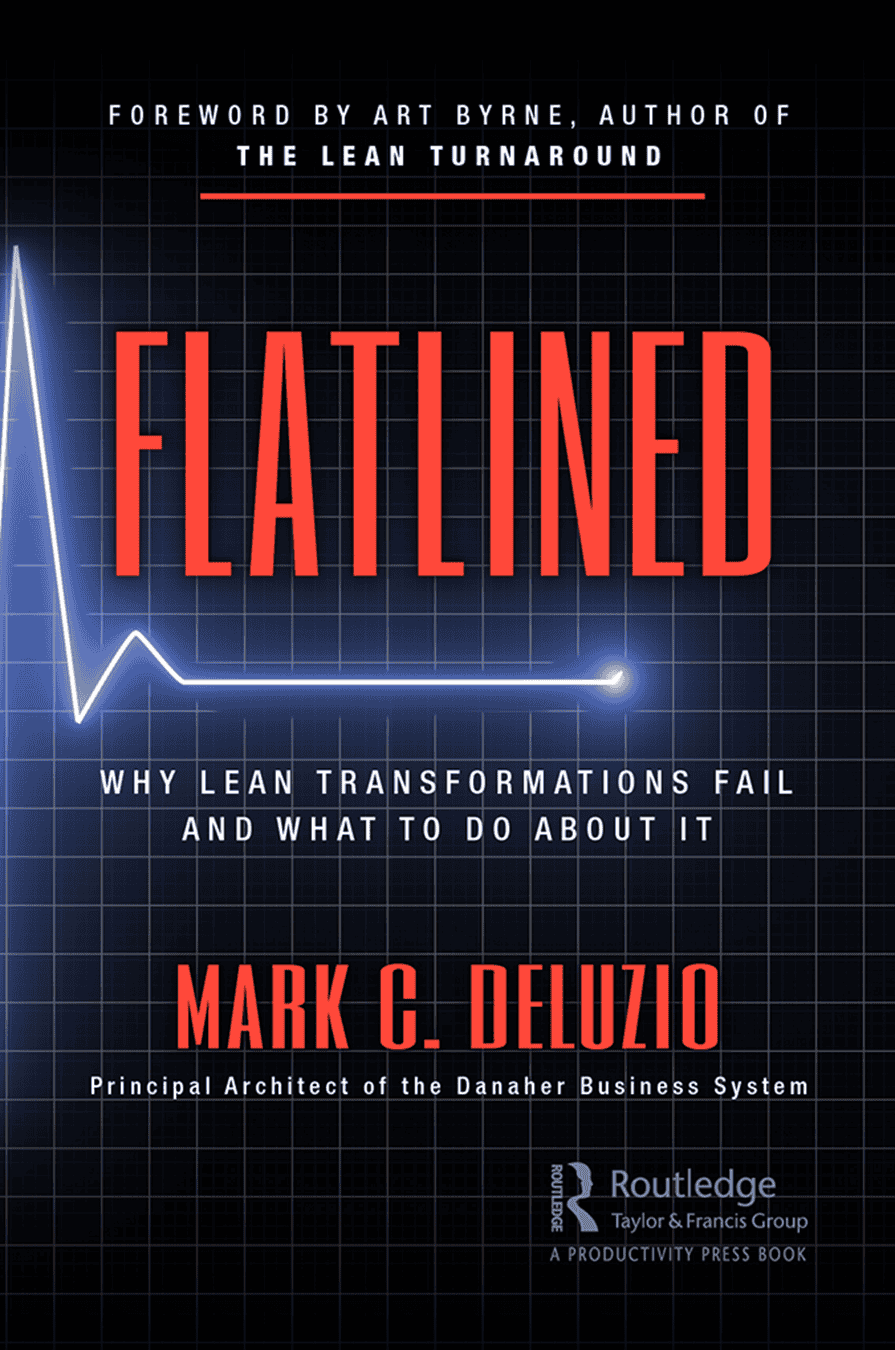
“To me, a program has a beginning and it has an end. If you really, truly do Lean, it never has an end, because what we’re trying to do is pursue perfection.” — Mark DeLuzio
When Lean is confined to a project, behaviors remain unchanged and improvements rarely persist. Teams can follow instructions and participate in events, yet real problem-solving rarely extends beyond visible tasks.
The enterprise misses opportunities to embed skills, thinking, and decision-making habits that drive lasting results.
Leaders who understand Lean as a cultural and organizational effort recognize that consistent thinking, learning, and reflection matter more than any dashboard or checklist. They prioritize aligning management practices, creating space for employees to experiment safely, and reinforcing the behaviors that sustain improvement.
It’s only after this mindset shift has been recognized that the first step into the material realm can be taken: designing a Lean office that supports capability building, not output generation.
Structuring the Lean Office for Success
Before you begin building a successful environment for Lean, it’s important to understand why the Lean office exists in the first place.
Spoiler alert: It’s not to generate reports or checkboxes.
The Lean office exists to develop skills and improve problem-solving capacity across the organization. Its impact, which can be profound when done correctly, comes from enabling people to act independently and make improvements that stick.
When this office is underpowered or misaligned, it becomes a source of frustration rather than progress.
Common pitfalls include staffing the office with technically skilled people who lack business insight, placing it too low in the hierarchy to influence decisions, or overloading staff with line duties that prevent them from coaching and mentoring effectively.
So what does success look like in this area, then?
Building a triumphant Lean office requires:
- Placing capable people in positions where they can lead, mentor, and model problem-solving behaviors.
- Having resources and authority to dedicate time to building capabilities across teams and functions.
- Clearly communicating to the entire enterprise that the purpose of the Lean office is to act as a lever for sustainable change.
With a strong foundation here, in the Lean office, the further stages of development become infinitely more achievable. Without one, creating a problem-solving framework that consistently produces meaningful improvements — also known as the driving principle of Lean — becomes impossible.
Building a Problem-Solving Framework That Wins
Despite the myriad of missteps, at the center of every Lean initiative is a leader who wants to do it right.
That’s why each endeavor starts with the aforementioned energy and optimism, and why it’s tragic to see a lack of structure lead to failure before the Lean framework can get off the ground.
To avoid this, leaders must understand that Lean is about solving problems, not just fixing them. When an organization attempts to fix a problem without a structured approach, efforts become reactive and short-lived. It’s like putting a Band-Aid on a broken leg.
“I’ve come to realize that Lean is all about problem solving, not fixing.” — Mark DeLuzio
A strong framework focused on solving problems at the root, however, is what offers employees the skills, time, and guidance to address issues holistically and sustain improvements.
Core Elements of a Successful, Holistic Framework
- Standardized Approach: Every team follows a consistent method for identifying, analyzing, and solving problems. This prevents confusion and allows lessons to be transferable across the organization.
- Training and Guidance: Employees receive practical guidance, tools, and coaching to solve problems independently. The goal is to equip people to act, not just follow instructions.
- Allocated Time and Resources: Problem-solving requires dedicated space and focus. Teams must have protected time to investigate issues, test solutions, and refine processes.
- Avoiding Superficial Activity: Boards, audits, or metrics alone do not build capability. Real progress comes from hands-on practice, mentorship, and iterative learning.
Organizations that provide structured problem-solving opportunities see higher engagement, better retention of improvements, and faster resolution of recurring issues. Not only that, but employees also gain confidence in their ability to identify root causes and implement solutions that last.
And that is what Lean truly is. Tools like Kaizens and Gemba walks are often mistaken as Lean, but they’re just that: tools. Unless wielded by a competent craftsman, they’re nothing more than inert objects.
Escaping the Functional Trap and Setting the Stage for Lasting Success
Even with a capable Lean office and a robust problem-solving framework, there’s still one more stumbling block that can trip up Lean initiatives.
If the underlying structure that leaders are building doesn’t reflect how work actually flows, it’s going to hinder operations more than it helps. This can be seen in companies that claim to operate in value streams, but in practice, keep functional silos intact and organize by function.
Teams that optimize within their own departments end up fixing visible issues locally while upstream or downstream problems persist. The result? Temporary wins that never add up to lasting improvement.
True Lean transformation requires addressing these structural misalignments. Roles must be clearly defined, responsibilities aligned with value streams, and cross-functional collaboration actively supported. Leadership must ensure that metrics, incentives, and priorities reinforce enterprise-wide outcomes rather than local efficiency.
When the framework matches reality, employees are empowered to identify root causes, act on problems that matter, and make improvements that stick. Then, and only then, does Lean stop being a collection of tools or activities and transform into a system that enables consistent learning and growth.
Winning in Lean starts with this deliberate structure and without it, even the most capable people and well-trained teams cannot achieve lasting results.
FAQs
1. Why do Lean initiatives lose momentum after early success?
Lean initiatives often stall when organizations focus on events, tools, and training without establishing a supporting management structure. Without clearly defined roles, responsibilities, and problem-solving routines, improvements fade and teams revert to previous habits.
2. Is Lean a program or a long-term management system?
Lean is a long-term management system, not a temporary program. Programs have defined endpoints, while Lean is built on continuous improvement, capability development, and ongoing problem solving embedded in daily operations.
3. What is the purpose of a Lean office in an organization?
A Lean office exists to build problem-solving capability and develop organizational skills, not to generate reports or manage dashboards. Its primary function is coaching, mentoring, and enabling sustainable improvement across teams and functions.
4. Why do some Lean offices fail to drive meaningful change?
Lean offices commonly struggle when they lack organizational influence, business credibility, or dedicated time for coaching. Placing the function too low in the hierarchy or overloading staff with operational duties limits their ability to build capability and shape behavior.
5. What makes a problem-solving framework effective in Lean organizations?
Effective Lean problem-solving frameworks rely on standardized methods, practical training, protected time for investigation, and leadership reinforcement. These elements help teams address root causes rather than applying short-term fixes.
6. How do functional silos interfere with Lean performance?
Functional silos encourage localized optimization, where departments improve their own metrics without considering system-wide flow. This often leads to delays, recurring problems, and improvements that fail to translate into enterprise-level performance gains.
7. How can leaders prepare their organization for Lean success in 2026?
Leaders prepare for Lean success by designing structures that reflect how value actually flows, aligning responsibilities across functions, empowering employees to solve problems, and reinforcing behaviors that support continuous improvement rather than short-term activity.